Rethinking Strength Gains: A Nuanced Approach to Assessing Progress

February 27, 2024

As an accredited exercise physiologist, I’m determined to peel back the layers of conventional wisdom in our field. 


Consider this: Could it be that the strength clients appear to develop over time is something they had the capacity for right from the start? It might not be as far-fetched as it seems.


Imagine Alex, who embarks on a new strength program. Initially, she lifts 20 kilograms. Six weeks in, she's proudly lifting 30 kilograms. Great progress, right? But what if, with the right mental approach, technical guidance, and optimal conditions, Alex could have managed that 30 kilograms in her initial session? It is entirely possible.


This scenario challenges us to reflect: Is Alex truly getting stronger, or is she simply unlocking an inherent capability?


To see how this could be true, let us consider some underlying factors that make it possible.


1. Neural Adaptations: Tapping Into Hidden Strength


Initial surges in strength often stem from the fact that the brain is a controlling factor in our movement, strengthening connections it uses regularly and eroding ones it doesn't - much like mastering a dance sequence – a clumsy start leading to a graceful flow.


 2. The Psychological Edge: The Weight of the Mind


The mental dimension in training is profound. Initially, fear and the unknown can act as additional burdens and barriers. Yet, as familiarity sets in, these psychological barriers dissipate, often resulting in notable performance boosts. The critical query here is whether this represents a bona fide increase in physical strength or the shedding of inhibitory constraints.


3. The Conviction Effect: Placebo and Performance


The potency of belief is a force to be reckoned with. When clients have faith in a particular supplement or program, their output may surge, spurred by their convictions rather than genuine physiological change. Thus, we must discern the true catalyst of progress.


4. Understanding Rest: Misreading the Rebound


Integrating rest in training is pivotal, but is the upsurge in strength that follows truly a gain, or is it merely the body bouncing back from a state of rest?


5. The Precision of Measurement: Quantifying True Progress


Variability in performance measurements can obscure true progress. Factors such as equipment, environmental conditions, and even daily physiological fluctuations prompt us to ask: How can we accurately gauge progress?


So what can you do to push the boundaries of your inherent capabilities? Consider these approaches:


  • Consistent Conditions:
    Aim for consistency in your training environment – lift at the same time of day and use the same equipment to better measure true strength gains.
  • Incremental Overload: Progressively increasing load ensuring each increase is manageable and takes into consideration how you feel including managing your sleep and stress


To truly understand our strength, incorporating varied methods like isometric strength assessment and adjusting our training methods based on how we are feeling might offer more definitive insights. It's about enhancing our understanding of strength training and its outcomes.


The intent here is not to undervalue our profession or the efforts of our clients but to foster a more critical and layered understanding of what constitutes 'progress.' Let's aspire to be the practitioners who question, scrutinize, and affirm that the achievements we applaud are founded on authentic physiological improvement, not merely the semblance of it.


We have an incredibly important role in unlocking what is possible with our clients. The nuance might be that the path is not always as obvious and the skill of the practitioner is equally in building relationships, understanding barriers and helping clients move past their own internal beliefs and biases to achieve progress.


*Disclaimer:
This discussion aims to ignite conversation and self-reflection, inviting both professionals and clients to examine the broader narrative surrounding strength training.*
November 20, 2025
“Sciatica” is one of the most commonly misused labels in back-pain conversations. Many people assume that any pain in the leg coming from the back must be sciatica, but that’s simply not true. Real sciatica is much less common than most people believe, accounting for only 5–10% of all low-back-pain cases . That means 90–95% of people with back pain do not have sciatica . This article breaks down what sciatica actually is, how to recognise it, what causes it, and what current research says about treatment and exercise. What Sciatica Really Is Sciatica refers to pain caused by irritation or compression of the spinal nerves , typically starting in the lower back and travelling down the leg. It can involve a mix of sensory and motor symptoms. Common sensory symptoms: Numbness Pins and needles A sharp, localised shooting or burning pain Common motor symptoms: Reduced leg strength Difficulty controlling movement Altered posture or gait These symptoms occur because the irritated nerve affects both how the leg feels and how it functions. Common Misconceptions About Sciatica Around two-thirds of people with low-back pain also report leg pain , and many assume that any leg symptom equals sciatica. However, most leg pain from the back is non-specific and does not follow a nerve pathway. A key hallmark of true sciatica: Pain that travels below the knee , following a predictable nerve distribution. However, not all sciatica travels below the knee, another important indicator is that the leg pain is typically worse than the back pain when a nerve root is involved. Why Sciatica Often Flares With Coughing or Sneezing Coughing, sneezing, or straining increases intra-abdominal pressure , which can momentarily irritate an already affected nerve root, intensifying pain. Where the Pain Comes From Sciatica can originate from different lumbar spinal levels—most commonly L4–L5 or L5–S1 . Each level affects a different nerve root, producing different patterns of pain, numbness, or weakness down the leg and sometimes into the foot. The Most Common Cause: Lumbar Disc Herniation After ruling out other conditions, about 85% of sciatica cases involve a herniated disc pressing on a nerve root. A disc herniation is the displacement of disc material beyond the normal margins of the disc space. It occurs when the disc material, typically the softer inner material breaks through the outer ring. The leading cause of disc herniations is genetics (Patel et al (2011) PMID: 21266637 and Battie et al (2009) PMID: 19111259). Equally there is no evidence that lifting with a bent back increases the risk of disc herniations (Swain et al (2020) PMID: 31451200 and Saraceni et al (2021) PMID: 34288926). Furthermore the spontaneous regression of herniated disc tissue can occur in between 41 and 96% of cases, and can completely resolve after conservative treatment. Clinicians often use the straight-leg-raise test as part of assessment. A positive “crossed” straight-leg-raise test (pain in the affected leg when the opposite leg is lifted) is highly specific for nerve-root compression. Most Sciatica Improves Naturally The natural course is overwhelmingly positive: 87% of people improve within 3 months without surgery Motor function often recovers Sensory changes (e.g., numbness) may take longer but usually improve over time First-line conservative treatment usually includes: Anti- inflammatory medication or other pain-relief strategies Guided mobility and strengthening exercise Avoiding prolonged bed rest and maintaining gentle activity Epidural injections may help short-term pain but don’t change long-term outcomes . A healthcare professional should always guide care to ensure symptoms are managed safely. When Should You Get an MRI or CT Scan? Imaging is not recommended early , because many pain-free people have disc bulges. MRI or CT is considered when: There are severe or worsening neurological symptoms “Red flag” signs suggest infection or tumour Symptoms persist beyond 4–6 weeks and the patient may be a candidate for injections or surgery What About Surgery? Surgery may be appropriate when: MRI findings match the symptoms Pain persists despite 6+ weeks of conservative therapy The person prefers the option of faster relief Most research shows: Surgery offers quicker relief , But after 1 year, outcomes are similar whether you had surgery early or stuck with conservative treatment. Repeat surgery rates are around 6% after 1 year and 13% after 4 years . What Exercises Help With Sciatica? The most effective exercises for sciatica are highly individualised . Because each person experiences different symptoms, different aggravators, and different levels of nerve sensitivity, what works for one person may not work for another. This is why guided care from a trained professional is invaluable. A good starting point: Begin with movements that don’t irritate the nerve but still encourage gentle mobility and load through the spine. Although exercise routines should be individualised for each person, some exercises suitable for the initial stages of sciatica may include: Side bends Trunk rotations Glute bridges Leg swings Walking These exercises apply load away from the irritated nerve root , reducing mechanical tension while still promoting healthy movement and mild loading through the spine. Over time, the goal is to gradually build tolerance and restore strength and flexibility without provoking symptoms. As symptoms settle, exercises must be progressed to include more direct loading, strength work, always tailored to the individual. Final Thoughts Sciatica is a specific type of nerve-related leg pain, not just any leg pain that accompanies a sore back. Although it can be intense and limiting, most cases improve significantly with conservative management, movement, and time. Understanding the signs, causes, and treatment options helps you navigate the condition confidently and choose the right path forward. References: Deyo, R. A., & Mirza, S. K. (2016). Herniated Lumbar Intervertebral Disk. The New England Journal of Medicine, 374(18), 1763-1772. Patel, A. A., Spiker, W. R., Daubs, M., Brodke, D., & Cannon-Albright, L. A. (2011). Evidence for an inherited predisposition to lumbar disc disease. The Journal of Bone & Joint Surgery. American Volume, 93(3), 225–229. Battié, M. C., Videman, T., Kaprio, J., Gibbons, L. E., Gill, K., Manninen, H., Saarela, J., & Peltonen, L. (2009). The Twin Spine Study: Contributions to a changing view of disc degeneration. The Spine Journal, 9(1), 47–59. Swain, S., Srikandarajah, S., Haines, T., & Hancock, M. (2020). Strength and exercise-based interventions for knee osteoarthritis: A systematic review and meta-analysis. Journal of Orthopaedic & Sports Physical Therapy, 50(8), 460–478. Saraceni, N., Kent, P., Ng, L., Campbell, A., & Straker, L. (2021). What kinds of exercise improve pain and physical function in people with knee osteoarthritis? A systematic review and component network meta-analysis. British Journal of Sports Medicine, 56(21), 1228–1239.
August 22, 2025
Knee osteoarthritis (OA) affects millions worldwide, leading to pain, stiffness, and reduced quality of life. But here's the good news: exercise is one of the most effective non-pharmacological treatments for managing knee OA. In fact, recent research confirms that regular movement not only eases pain but also improves strength and daily function. So, which exercises offer the best results? Let’s break down the top 3 exercises you should be doing to manage knee osteoarthritis. 1. Aerobic Exercise Aerobic exercise helps improve cardiovascular health, maintain a healthy weight, and reduce systemic inflammation, all of which can help manage OA symptoms. Recommendations: 150 minutes of moderate or 75 minutes of vigorous aerobic activity per week is recommended**. Benefits include reduced joint pain and stiffness and improved endurance. Best options for knee OA: Brisk walking Swimming Cycling (stationary or outdoors) **Note: This is a general recommendation. While research hasn’t determined the exact amount of aerobic exercise required specifically for osteoarthritis, any amount can offer benefits. However, to support overall health and well-being, which can positively impact OA, the recommended guidelines remain a helpful target. 2. Resistance Training Strengthening the muscles around the knee, especially the quadriceps and glutes can reduce joint pain. Recommendations: Resistance training programs lasting 5 weeks or more produce moderate improvements in pain, strength, and function. Interventions under 4 weeks are generally ineffective. Surprisingly, total exercise volume or adherence levels are not strongly associated with better outcomes. This means doing some training consistently over time matters more than hitting perfection. Strength exercises for knee OA: Sit-to-stands or chair squats Step-ups Leg extensions 3. Functional Exercises Functional exercises are movements that closely mimic the activities you perform in daily life or during recreational tasks. Functional exercises can improve your ability to carry out everyday movements like walking, standing, climbing stairs, or getting out of a chair, key areas affected by knee osteoarthritis. What the research says: Moderate benefits for physical function in daily activities (ADL) and sport-specific function after 3–6 months of exercise Resistance training improves functional outcomes, especially when programs are at least 5 weeks long. These findings highlight the importance of exercises that mimic real-life movements and support daily independence. Functional exercises can include: Breaking down an activity you find difficult into smaller movements Doing the movement you find painful but with supports, different ranges of motion or for less repetitions Walking drills and controlled lunges Focusing on these movements can improve strength and functional capacity, helping you move better and more confidently in daily life. What the Science Says Overall A recent meta-analysis of over 280 studies showed: Moderate benefits for pain and physical function from 3 to 6-month resistance training programs. Longer interventions (up to 12 months) had additional functional gains . No clear link between total exercise dose or adherence and outcome, so the key is to just get started and stay consistent . 🏁 Final Thoughts Managing knee osteoarthritis doesn’t require extreme workouts, it requires smart , consistent , and purposeful movement . Focus on aerobic activity, resistance training, and functional exercises to see the biggest improvements in pain and daily function. Symptoms from knee osteoarthritis will present differently in each individual person which is why it is important to have a personalised , tailored exercise program. If you're not sure where to begin, speak with an exercise physiologist to build a safe, effective plan tailored to you. Need help getting started? Reach out to our team for personalised support in managing osteoarthritis through movement.
A woman is talking to another woman while holding a piece of paper.
May 23, 2025
Why Exercise Is Essential in Preventing and Managing Type 2 Diabetes
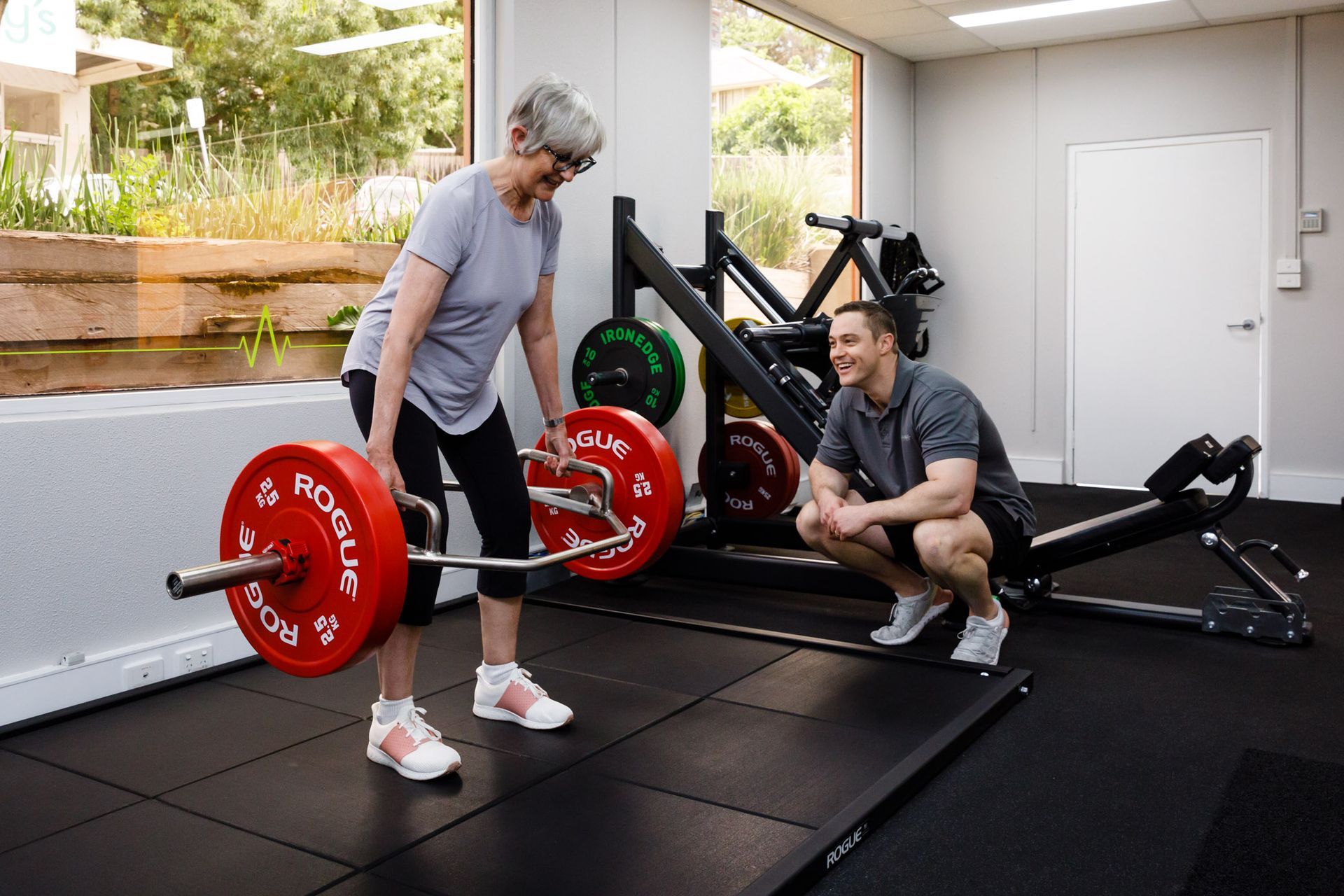
A man is squatting next to a woman lifting a barbell in a gym.
April 29, 2025
The 3 Best Exercises for Osteoporosis Backed by Science
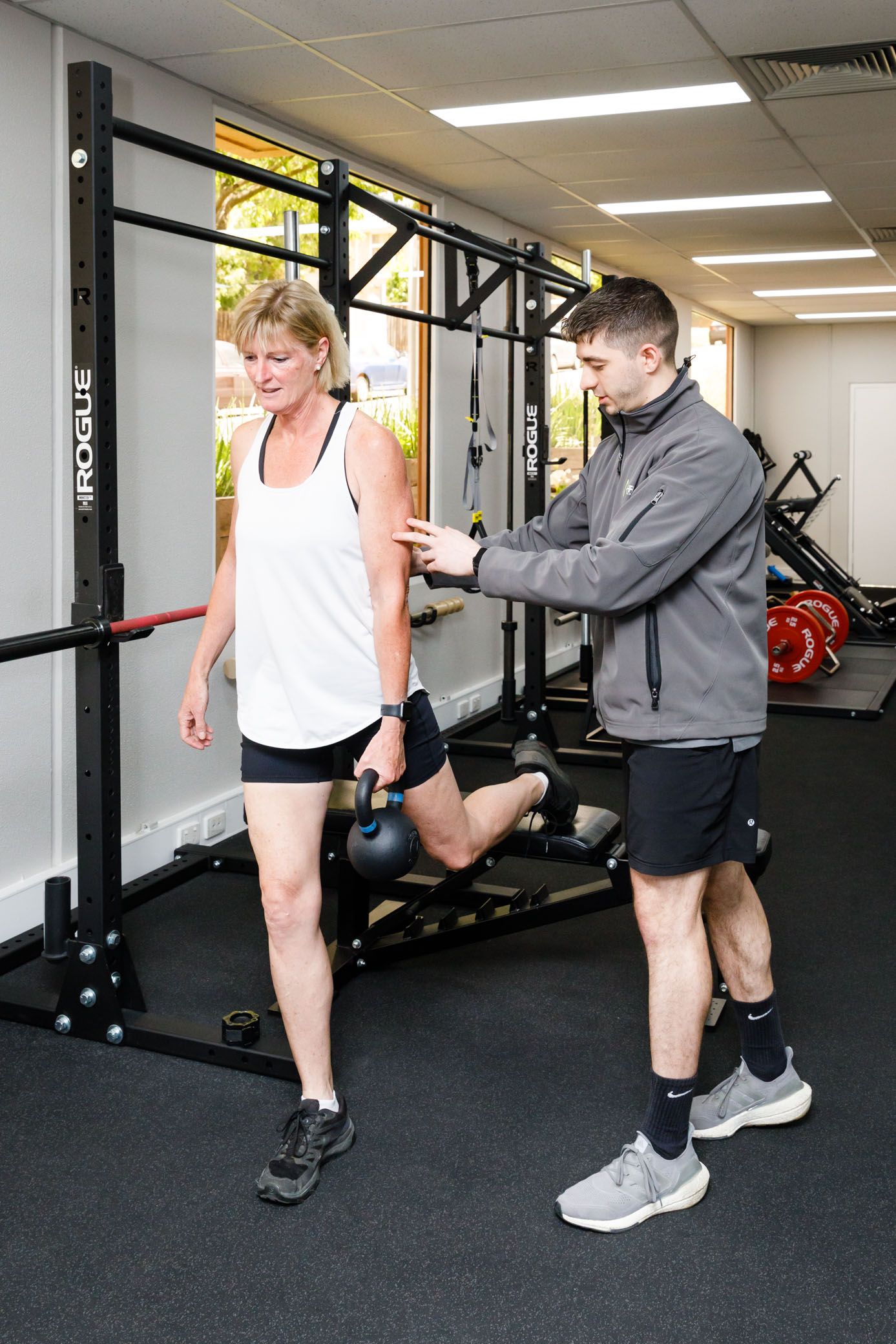
A man is helping a woman do exercises in a gym.
October 31, 2024
Rethinking Pain in Exercise: A Journey Beyond Discomfort
The Vital Role of Exercise Physiologists
August 6, 2024
We often take for granted the simple acts of daily life—walking to the shops, climbing stairs, or even maintaining our balance as we move about. Yet for many Australians, these seemingly effortless activities can be significant challenges. In our latest blog, our team shares their insights and the impact of their role in helping people achieve the best version of themselves.
A Day in the Life of an Exercise Physiologist
August 1, 2024
Ever wondered what a day in the life of an Exercise Physiologist looks like? We sat down with the team to get their insights and stories around what their average day looks like.
Careers in Speech Pathology
July 30, 2024
In our latest article, Janine Elias, our Speech Pathologist here at Activate Allied Health shares her journey into a career in Speech Pathology, along with the challenges, rewards and key insights you need to know.
The Rewarding Journey of an Exercise Physiologist
July 9, 2024
In our latest article, our team shares the most rewarding aspects of their role as an Exercise Physiologist, while providing a candid insight into their challenges too. Of course, the personal fulfilment and rewards from the job outweigh the challenges, but it’s great to share these insights, especially for people considering a career in Exercise Physiology.
How to be the best exercise physiologist you can be.
July 3, 2024
In our latest article, our team of expert EPs have shared their insights on the skills, qualities and mindset needed to thrive in this role.