Sarcopenia: Why Muscle Matters More As We Age
Ever noticed that getting up from a low chair, carrying the shopping or climbing stairs feels harder than it used to? It’s easy to put it down to “just getting older”, but often there’s something more specific going on. It’s called sarcopenia, and the good news is that it’s something we can do a lot about.
In this article, we explain what sarcopenia is, why it happens, how it’s picked up, and the simple, evidence-based steps you can take to protect your strength for years to come.
What is sarcopenia?
Sarcopenia is the age-related loss of muscle mass, strength and function. It mostly affects older adults, and over time it can lead to frailty, reduced physical function and a higher risk of falls and fractures.
It happens gradually. After about age 50, muscle mass drops by around 1–2% each year. That might not sound like much, but without intervention it adds up and it can have a real impact on overall health, independence and quality of life.
What causes it?
There’s rarely a single cause. Sarcopenia usually comes from a mix of factors working together:
- Getting older. As we age, our bodies don’t build muscle as efficiently, and the muscle fibres themselves can shrink.
- Not moving enough. Long periods of sitting or inactivity cause muscles to weaken and waste and skipping exercise speeds the process up.
- Hormonal changes. Levels of key hormones such as testosterone, growth hormone and oestrogen fall with age, which contributes to muscle loss.
- Chronic illness. Conditions like diabetes, heart disease and long-term inflammation can make muscle loss worse.
- Poor diet. Without enough protein and overall energy, muscles miss out on the building blocks they need to stay healthy.
- Nerve changes. When the nerves that control our muscles don’t work as well, muscles become harder to use and can waste away.
The encouraging part? Two of the biggest drivers, activity and nutrition, are well within our control.
How is sarcopenia diagnosed?
There’s no single test. Health professionals usually combine a clinical assessment with a few simple measurements:
- Physical examination. Your clinician looks at muscle strength, function and the way you walk. Difficulty with everyday tasks, like standing up from a chair, can be an early sign.
- Muscle mass measurement. Tools such as DEXA (dual-energy X-ray absorptiometry) scans or bioelectrical impedance analysis (BIA) estimate how much muscle you have.
- Strength testing. Handgrip strength and chair stand tests are quick, reliable ways to check muscle strength.
If you’ve noticed you’re getting weaker or slower, it’s worth raising with your GP or an exercise physiologist, the earlier it’s picked up, the easier it is to turn around.
What can you do about it?
Lifestyle plays a major role in both preventing sarcopenia and slowing its progress. The two most powerful tools are exercise and nutrition.
Resistance training: the number one strategy
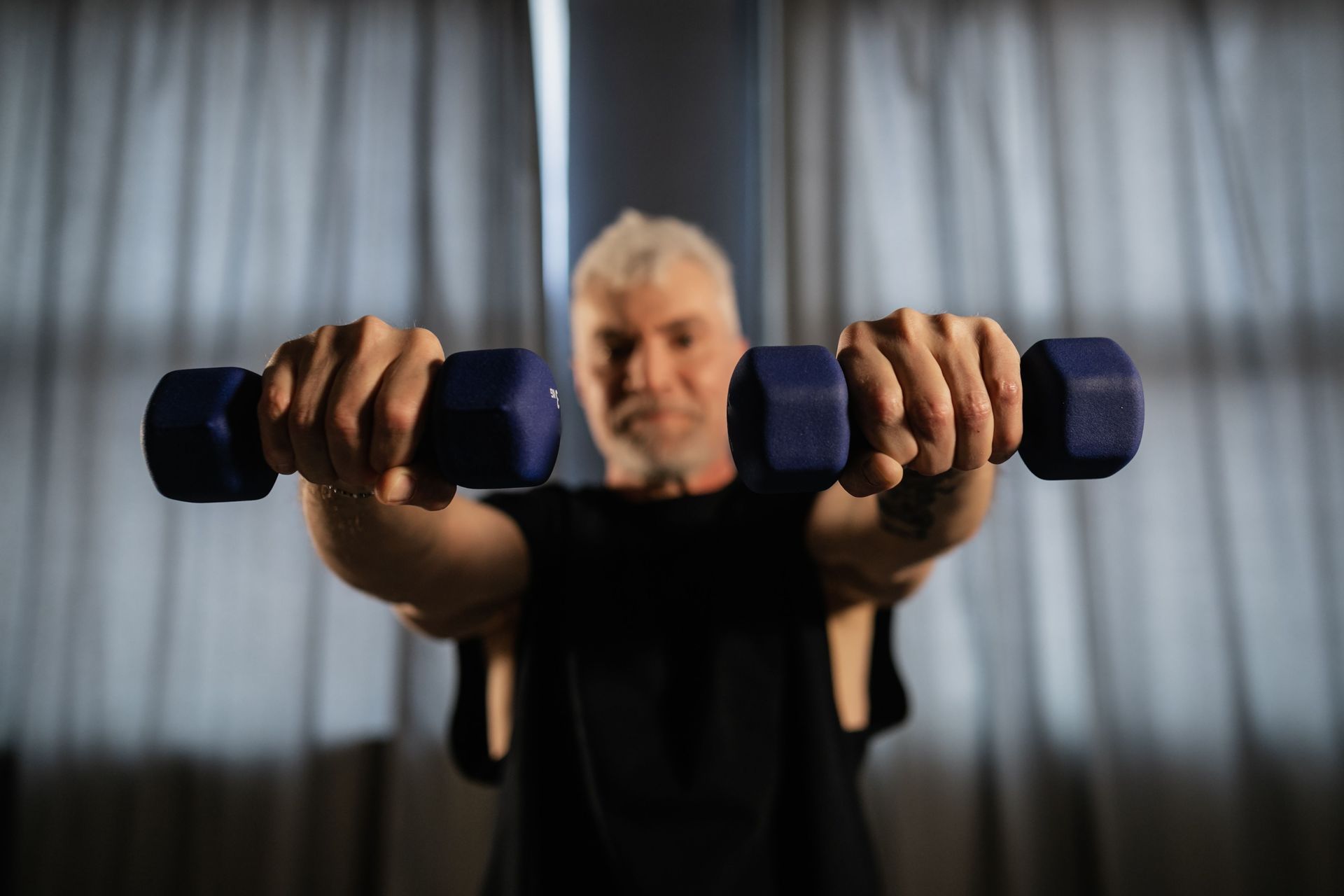
Resistance (strength) training is the most effective exercise for preventing and treating sarcopenia. Because muscle loss affects the whole body, a whole-body program works best, targeting all the major muscle groups.
For the best results:
- Train 2–3 times per week
- Aim for 8–12 repetitions per set
- Gradually increase the weight or resistance so your muscles keep being challenged
It really is a case of “use it or lose it”, consistency matters more than intensity.
Aerobic exercise: support for the whole system
Walking, cycling and swimming are great for your heart, and they also help maintain mobility and everyday fitness. Aim for 150 minutes of moderate-intensity or 75 minutes of vigorous-intensity aerobic exercise each week, alongside your strength work.
Nutrition: fuel for your muscles
Muscles need protein to repair and grow. Older adults should aim for 1.0–1.2 grams of protein per kilogram of body weight per day. For someone weighing 70 kg, that’s roughly 70–84 grams a day, ideally spread across meals.
Already training with us?
If you’re already doing a strength program with our EP team, you’re well ahead of the game. Chances are we’re already addressing many of the factors in this article: building muscle across your whole body, progressing your loads, and checking in on things like your activity levels and nutrition.
So think of this as a good reminder of why we keep nudging you to lift a little heavier, squeeze out one more rep or add an extra set. That gradual progression is exactly what keeps your muscles challenged and growing, and it’s one of the best ways to protect your strength, balance and independence as you age. Keep showing up, keep pushing, and keep asking us questions along the way.
New to strength training?
If you’re new to strength training, or haven’t done it in a while, it’s normal to feel unsure where to begin. That’s exactly where an exercise physiologist can help. Our EP team can assess your current strength and mobility, then build a program tailored to your goals, health conditions and confidence level, progressing it safely as you get stronger.
It’s never too late to start. Muscle responds to training at any age, and every session is an investment in your independence.
Ready to get started, or know someone who could benefit? Book an appointment with our Exercise Physiology team at Activate Allied Health, 1/131 Bulleen Road, Balwyn North. Call us on 03 8849 9795 or visit activatealliedhealth.com.au.
References
- Cruz-Jentoft AJ, Baeyens JP, Bauer JM, et al. Sarcopenia: European consensus on definition and diagnosis: Report of the European Working Group on Sarcopenia in Older People. Age Ageing. 2010;39(4):412–423. doi:10.1093/ageing/afq034
- Doherty TJ. The influence of aging and gender on skeletal muscle mass and strength. Current Opinion in Clinical Nutrition and Metabolic Care. 2001;4(6):503–508. doi:10.1097/00075197-200111000-00003