August 6, 2026
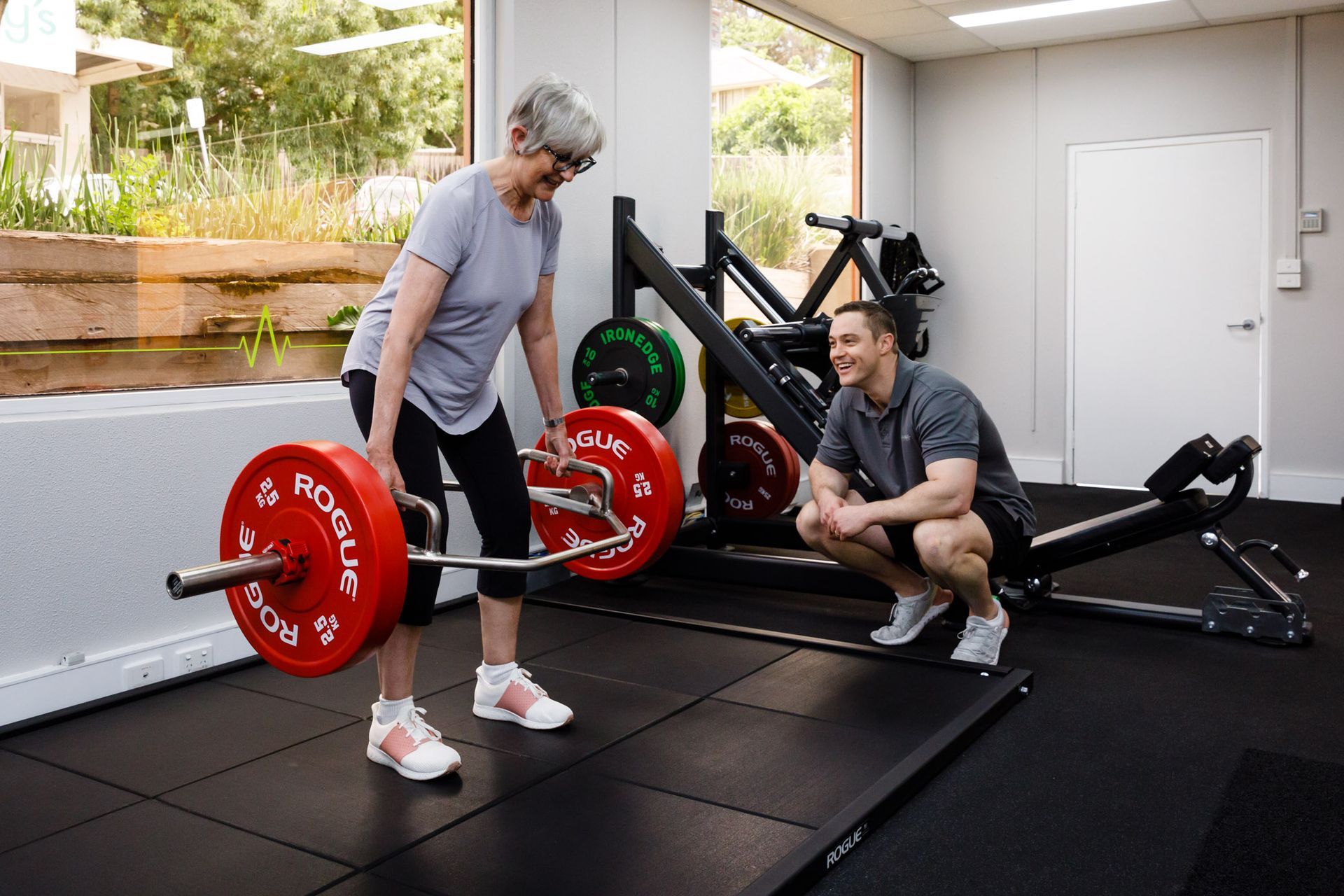
Resistance training and bone loading are important for maintaining and improving bone density. For people with osteoporosis, loading the bones is therefore a key component of management. However, when osteoporosis affects the spine, there is often significant fear around loading the spine due to a perceived increase in fracture risk. Fracture risk is influenced by many factors, and exercise programs should always be individualised. A thorough assessment should be completed before commencing an exercise program to ensure the exercises prescribed are appropriate for the individual's health status, functional capacity, and goals. One of the most important studies in this area is the LIFTMOR trial, which investigated the safety and effectiveness of high-intensity resistance and impact training (HiRIT) in postmenopausal women with low to very low bone mineral density (BMD). Participants were over 58 years of age and had a T-score of -1.0 or lower at the hip or spine. The HiRIT group progressively worked up to lifting approximately 85% of their one-repetition maximum (1RM) and performed deadlifts, squats, overhead presses, and jumping exercises twice per week using a 5 × 5 format. The control group completed a low-intensity exercise program. Importantly, despite the high loading involved, the HiRIT group did not experience an increased incidence of vertebral fractures over the 8-month intervention period. Participants underwent imaging at both baseline and follow-up, providing evidence that appropriately prescribed heavy resistance training can be performed safely in this population. What does this tell us about the best exercises for spinal osteoporosis? The LIFTMOR trial provides evidence that heavy deadlifts, squats, overhead presses, and impact exercises such as jumping is likely to be safe and effective when properly prescribed and supervised. However, this does not mean that every person with osteoporosis should immediately perform these exact exercises. Every individual has unique limitations, movement capacities, injury histories, and levels of confidence, and this trial excluded women with co-morbidities. It is common for people in their 60s to have co-morbidities, including osteoarthritis, diabetes, or previous muscle injuries. For this reason, exercise programs should be personalised. An Exercise Physiologist (EP) can assess the individual and determine the most appropriate starting point, selecting alternative exercises where necessary while still targeting the same physical qualities. The long-term goal may be to work toward exercises such as deadlifts, squats, overhead presses, and impact loading, but the pathway to these exercises will vary between individuals. The key message from the LIFTMOR trial is that resistance training for some people with spinal osteoporosis can be effective. While the specific exercises performed may differ from person to person, a well-designed, individualised program can progressively build toward higher levels of loading that support bone health and physical function. A Deeper Dive into the LIFTMOR Trial Study Design The trial involved 8 months of supervised HiRIT, consisting of 30-minute sessions performed twice per week. The program included four exercises: the deadlift, overhead press, back squat, and jumping chin-ups. Training intensity was greater than 80–85% of 1RM, performed as 5 sets of 5 repetitions. Sessions were supervised with a maximum of 8 participants. The comparison group completed an unsupervised, low-intensity home-based exercise program. This is a very high-intensity program and may not be achievable or advised for everyone. Participants Participants were postmenopausal women older than 58 years with a T-score of less than -1.0 at the hip or spine. Women were excluded if they had a lower limb joint injury or surgery, a recent fracture (within the previous 12 months), localised back pain, uncontrolled cardiovascular disease, cognitive impairment, hyperparathyroidism, diabetes, immobility, or long-term corticosteroid use. A total of 406 women consented to participate, but only 101 met the inclusion criteria, meaning only 25% were eligible. Fifteen participants dropped out of the trial, with one injury reported in the HiRIT group, identified as a lower back strain. The exclusion of women with co-morbidities is problematic, as it can be expected that many people in their 60s will have other health concerns. The fact that only 25% of women who applied to participate were eligible suggests that this program may only be suitable for a relatively narrow group of women with osteoporosis. Discussion The authors stated that "although we observed no serious adverse events in the LIFTMOR trial, we were not adequately powered to assess safety as an outcome." They also noted that they studied a relatively healthy population and that their findings may not be applicable beyond that population. This raises an important question. If the study was not adequately powered to assess safety as an outcome, can it confidently conclude that the intervention is safe? The study can conclude that the intervention was effective within the population studied, but the strength of any conclusions regarding safety is less clear. At the same time, there is an inherent risk in any exercise program. While clinicians can attempt to manage factors that may contribute to injury, the ability to completely prevent injury is limited.